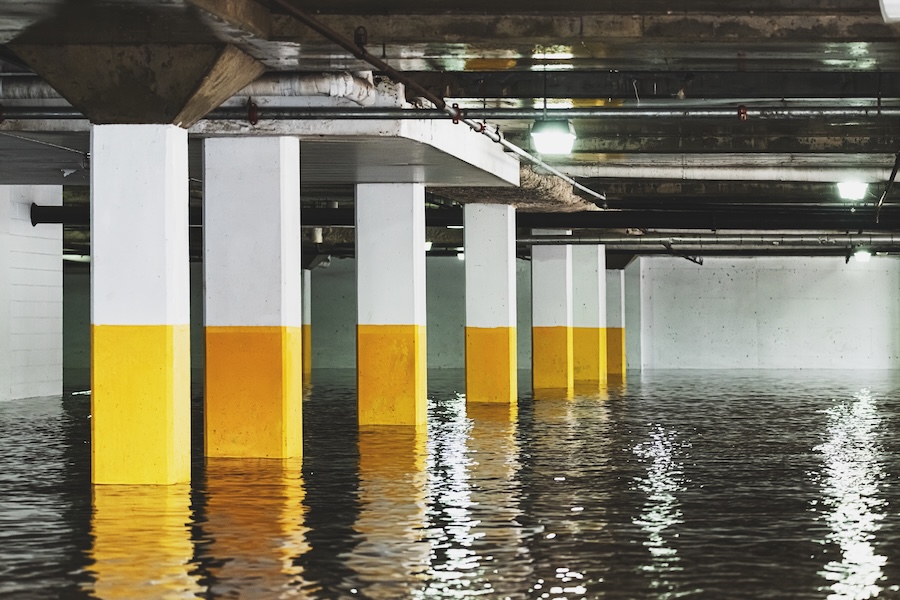
If flash flooding reaches an underground parking garage, the first priority is keeping people out of danger. Block access to the flooded area, avoid any contact with standing water near electrical systems, and bring in qualified help before cleanup begins. In Bethesda and Silver Spring, MD, heavy rain can overwhelm drainage systems quickly, so property managers need a plan that works even when conditions change fast.
The goal is to make the area safe, figure out how far the water spread, and start cleanup without creating new problems or secondary water damage elsewhere in the building.
Step 1: Restrict Access to the Flooded Garage
Close the garage as soon as flooding is discovered. Even shallow water can hide damaged pavement, debris, or other hazards, and the risk goes up if electrical equipment has been exposed.
Use barriers, cones, or locked access points to keep tenants, visitors, and staff out. Notify building occupants right away so no one tries to enter the garage for a vehicle or stored property before the area has been checked.
Step 2: Shut Down Electrical Systems Only If It Is Safe
Floodwater and electricity are a dangerous combination, so affected circuits may need to be shut down before anyone enters the area. Do not walk through standing water to reach a breaker panel or electrical room.
If the garage circuits can be accessed safely from a dry location, trained building staff or a licensed electrician can shut down the appropriate systems. That may include lighting, automatic gates, sump pumps, elevators, or EV charging equipment.
If there is any doubt about electrical safety, keep the area closed and wait for qualified personnel.
Step 3: Document the Flood Damage
Once the immediate hazards are under control, document the condition of the garage before water removal changes the scene. Photos and video can help with insurance, tenant questions, and the building’s own incident records.
Capture the overall extent of the flooding first, then take closer images of damaged equipment, walls, vehicles, and other affected areas from a safe location.
- The date and time the flooding was discovered
- Wide photos showing how far the water spread
- Close-up images of damaged equipment or building materials
- Video from safe, accessible areas
- A written log of the actions taken
- Damage to tenant vehicles or stored belongings
Do not delay evacuation, electrical shutdowns, or other safety steps just to take photos. Documentation comes after the immediate danger is under control.
Step 4: Remove Floodwater Professionally
Flash floodwater should be treated as contaminated water, especially when it has entered from streets, storm drains, or other outdoor areas. It may contain sewage, chemicals, bacteria, or debris that make it unsafe for staff to handle.
Large parking garages also hold far more water than basic shop vacuums or portable pumps can manage. Professional commercial water damage restoration teams use extraction equipment designed for large losses and can begin removing water without exposing building staff to unnecessary risk.
Getting the water out quickly also reduces the amount of time walls, storage areas, and other materials remain wet.
Step 5: Check Elevator Pits, Storage Rooms, and Mechanical Areas
The visible water in the garage may not show the full extent of the loss. Floodwater can move through joints, wall openings, utility penetrations, and lower areas that collect water before anyone notices.
Elevator pits deserve particular attention because they sit below the garage floor and can fill quickly. Mechanical rooms and tenant storage areas should also be checked, especially if they share walls or floor levels with the flooded section.
If electrical switchgear, pumps, boilers, or other building systems were exposed, those components should be evaluated by the appropriate qualified professional before they return to service.
Step 6: Dry the Structure After the Water Is Gone
Removing standing water does not mean the garage is dry. Concrete, drywall, wood, and other materials can hold moisture well after the floor looks clear.
Professional drying may involve air movers, dehumidifiers, and moisture meters placed throughout the affected area. The equipment should stay in place until readings show that materials have reached appropriate drying levels, not simply until the space looks better.
This matters because trapped moisture can lead to mold, odors, and damage that becomes more difficult to address later.
Confirm the Garage Is Safe Before Reopening
Do not reopen the garage based on appearance alone. Electrical systems, elevators, lighting, gates, walking surfaces, and other affected building systems should be checked before tenants and visitors are allowed back in.
Any remaining drying equipment or restricted areas should also be clearly separated from normal traffic. If part of the garage is still under restoration, keep that section closed until the work is complete.
Get Help With Commercial Flood Damage in Bethesda and Silver Spring
A flooded underground garage can affect far more than parking spaces. Water may reach electrical systems, elevators, storage areas, and other parts of the building that need specialized inspection and drying.
Paul Davis Restoration has the equipment and experience to handle large commercial water losses, including floodwater extraction and structural drying.
If your property has a flooded parking garage, contact Paul Davis Restoration for commercial floodwater removal and water damage restoration in Bethesda or Silver Spring.