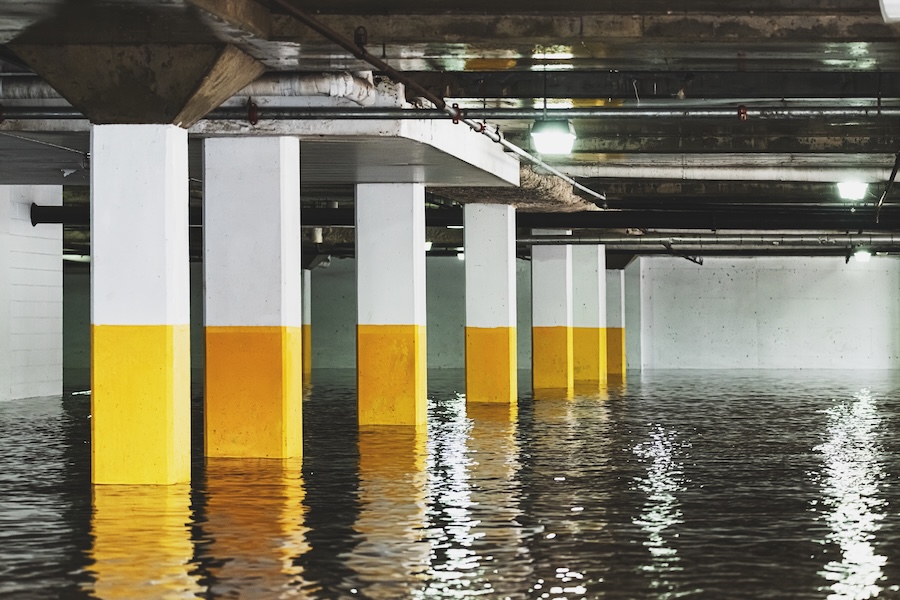
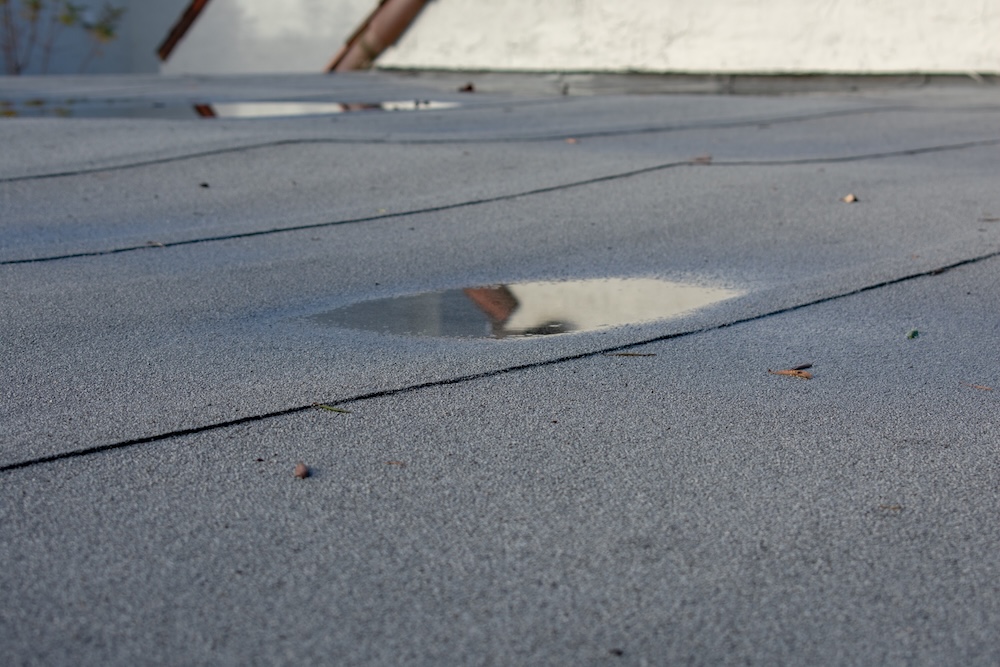
 Summer in the Suburban Maryland and DC area often brings intense thunderstorms that drop significant rain in a short time. For commercial property managers, these storms pose a unique threat to buildings with flat roofs. A flat roof’s effectiveness is entirely dependent on its drainage system. When these drains can’t keep up, water pools on the roof, creating a heavy load that can leak inside, disrupting operations and causing damage. Even small amounts of standing water, over time, can damage your commercial roof.
Once you understand how this happens, you can better protect your property, tenants, and inventory. Proactive maintenance can prevent many issues, but knowing how to react when water gets inside is just as critical for minimizing the long-term impact on your business.
Why Flat Roofs Are Vulnerable During Heavy Rain
Unlike sloped residential roofs that shed water quickly, flat roofs collect and channel water toward designated drains or scuppers. This system works well under normal conditions, but it has several vulnerabilities that can become apparent during a severe DC-area storm.
The primary issue is the limited slope. Even a small obstruction can impede water flow, causing it to pool. Drains can easily fill up with leaves, twigs, trash, and other debris. If you don’t clear these blockages, the water has nowhere to go.
Additionally, some older commercial buildings have undersized drainage systems that can’t handle the volume of modern storms. This combination of factors can lead to rapid water accumulation, quickly turning your roof into a shallow pool.
How Ponding Water Turns Into Interior Damage
Ponding water can become a ticking clock. The additional weight of the collected water puts significant stress on the roof’s structure and membrane. This pressure can strain seams, compromise flashing around vents and HVAC units, and exploit any existing weaknesses. Eventually, water will find a path of least resistance and leak into the building.
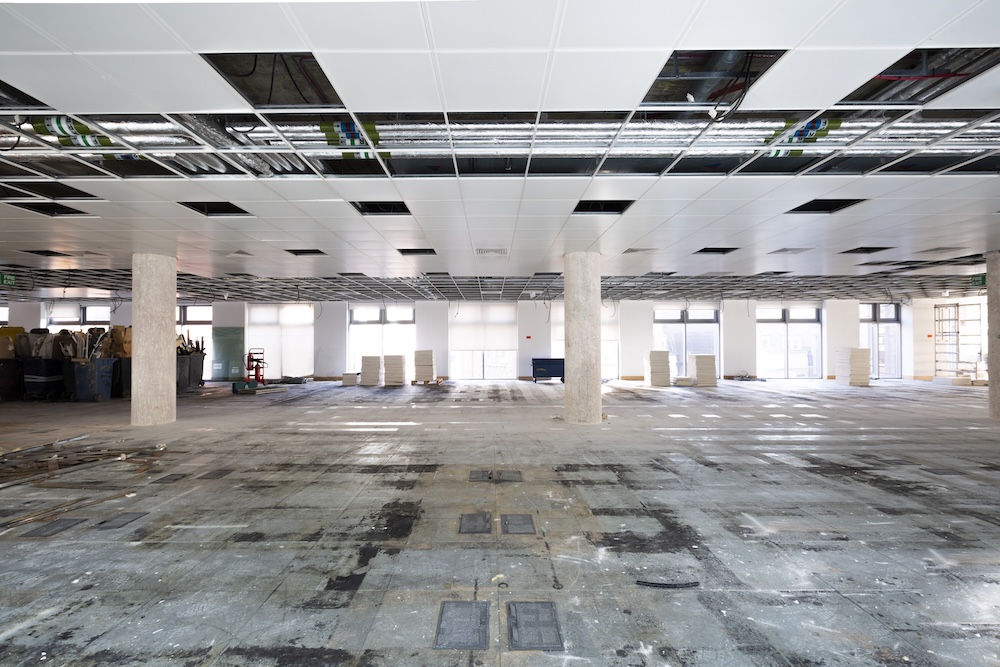
Once inside, the damage spreads quickly. Water soaks into ceiling insulation, rendering it ineffective and trapping moisture against the roof deck. It then drips onto ceiling tiles, causing brown stains and making them sag or collapse.
The water can run along ceiling grids, down interior walls, and into occupied spaces, damaging inventory, equipment, and flooring. A simple drainage issue can quickly become a complex, multi-floor water damage event.
Warning Signs Your Roof Drainage Is Falling Behind
Your building will often show signs of drainage problems before a catastrophic failure occurs. As a property manager, spotting these early warnings can save you from a major restoration project.
- Water standing for over 48 hours
- Visibly slow-clearing drains
- New or worsening ceiling stains
- Dripping sounds from the ceiling
- Sagging or bowing ceiling materials
- Recurring leaks after storms
What Property Managers Can Do Before the Next Storm
Prevention is the most effective strategy for avoiding commercial water damage from roof leaks. A proactive maintenance plan is essential for any property with a flat roof. Before the summer storm season arrives, it’s wise to take a few key steps.
Schedule routine professional inspections of your roof’s condition, focusing on drains, scuppers, and flashing. Clear all debris from the roof surface to ensure drains are flowing freely. If your building has low spots where water collects, consult a roofer about improving drainage. Addressing these issues proactively is far less disruptive and costly than an emergency leak.
What to Do When Water Gets Inside
Even with the best preparation, leaks can happen. When you discover water inside your commercial property, your immediate actions can significantly reduce the total damage.
First, prioritize safety. Cordon off the affected area to prevent slip-and-fall accidents and be mindful of electrical hazards. If water is near outlets or electrical equipment, shut off the power to that circuit if it’s safe to do so.
Next, document the damage with photos and videos for your insurance claim. If possible, move valuable contents out of the way. In retail spaces, storage areas, and offices, this could mean relocating inventory, covering sensitive equipment, or moving boxes and other contents away from the affected area.
Protecting valuable business assets, from electronics and stock to critical business documents, should be a top priority. Limiting access to the wet areas helps prevent water from spreading to other parts of the building.
Why Professional Water Extraction and Drying Are Crucial
When water intrusion or commercial flooding occurs, removing the visible water is only the first step. Building materials like drywall, insulation, and wood can absorb and hold a surprising amount of moisture. This hidden water is the source of long-term problems. That’s why professional commercial water damage restoration is so critical.
Our teams use specialized equipment to tackle the problem thoroughly. We use powerful water extractors to remove standing water, followed by industrial-grade air movers and dehumidifiers to dry the air and affected materials. With advanced moisture detection tools, we find hidden water in ceilings, walls, and flooring to ensure complete structural drying.
Preventing Mold and Secondary Damage
In our humid summer climate, any unaddressed moisture is a prime breeding ground for mold. Mold can grow within 24 to 48 hours of a water event, posing health risks and damaging your property. Simply drying the surface is not enough.
Thorough drying by a professional restoration company is essential to prevent secondary damage. We control the temperature and humidity, monitoring moisture levels until they return to normal, to reduce the risk of mold growth. This protects your building’s structural integrity and ensures a safe environment for tenants and employees.
When Professional Restoration Is Necessary
Some small leaks might be manageable for an in-house team, but many situations require immediate professional intervention. If you’re facing widespread water intrusion that affects multiple rooms or floors, it’s time to call for help. When building materials like drywall, insulation, or ceiling tiles are soaked, a professional crew may need to remove and replace them.
If there is water damage to valuable inventory, business equipment, or electronics, you will need specialized restoration techniques. Any significant ceiling damage or water in wall cavities calls for a professional response. Handling a major water event requires the right equipment, expertise, and manpower to mitigate damage effectively and quickly restore your business operations.
Fix the Drainage Problem and the Damage It Caused
After a flat roof leak, you face two challenges: repairing the roof to prevent future leaks and restoring the interior water damage. Addressing both is the only way to fully resolve the issue and protect your investment. While a roofer can handle the source of the problem, a dedicated restoration team should handle the consequences.
At Paul Davis Restoration, we specialize in helping businesses recover from events just like this. Our certified technicians have the experience and equipment to handle any size of commercial water damage, from extraction and drying to full-scale repairs. If your property has water damage from a failed roof drain, don’t wait for secondary problems to set in.
Contact us today at Paul Davis for professional commercial water damage restoration in suburban Maryland and Washington, DC.